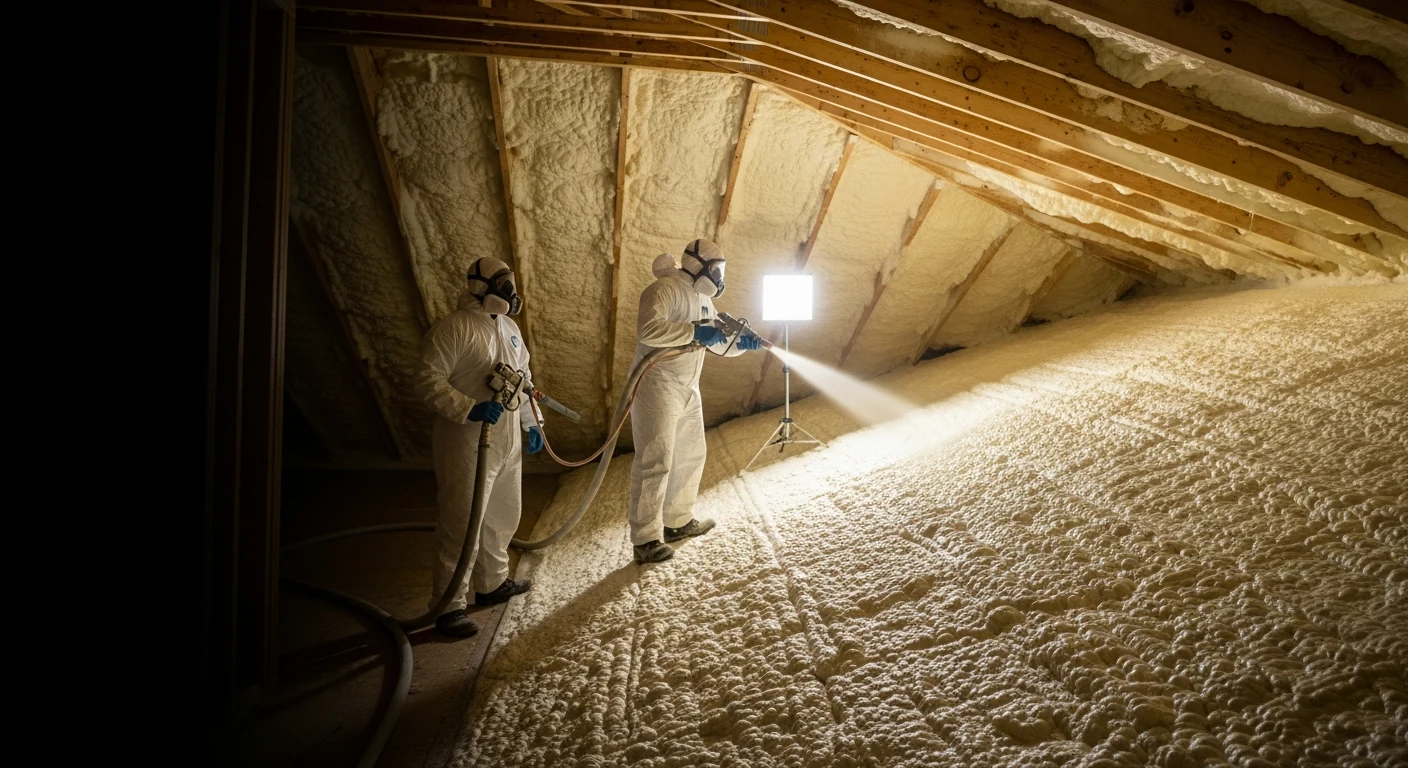
Frisco added tens of thousands of homes between 1995 and 2012. Most of them shipped with fiberglass batts in the attic. Here's why that's costing you on every summer electric bill.
Between 2000 and 2012, Frisco was one of the fastest-growing cities in the country. Subdivisions went up fast — Stonebriar, Starwood, Panther Creek, Christie Ranch. Most of those homes were built to code, which at the time meant fiberglass batts or blown-in insulation in the attic. That was the standard.
The problem is that North Texas heat has gotten harder on those homes over the past decade. Attic temperatures in Frisco regularly hit 140-150°F in July and August. Fiberglass insulation works by trapping still air. When that air heats up — and in a North Texas attic it absolutely does — the performance drops off. You end up with an attic that's acting more like a furnace than an insulating layer.
What That Means for Your Electric Bill
Your AC is fighting that heat constantly. The ceiling between your living space and the attic is the primary thermal barrier. If it's not doing its job, your HVAC runs longer, harder, and more often. Oncor data shows that cooling accounts for 40-50% of summer electricity bills in North Texas homes. A significant chunk of that is heat coming through a poorly insulated attic.
Why Spray Foam Works Better in This Climate
Spray foam doesn't rely on trapped air. It creates an airtight seal at the roof deck or ceiling plane — whichever surface you're spraying. That seal means hot attic air stays on the outside of your building envelope, not bleeding through. It also means your HVAC isn't conditioning air that's leaking out through every gap and seam.
What to Do if Your Home Was Built Before 2015
Start with an attic assessment. If you're seeing high summer bills, uneven room temperatures, or an AC that runs all night, there's a good chance your attic insulation is part of the problem. We can come out, take a look, and tell you exactly what's going on — at no charge.